

Application
Zero liquid discharge without an evaporator on the whole flow
A membrane route to ZLD compliance that carries the stream to crystallization-ready concentration, so the thermal stage is sized only for what is left.
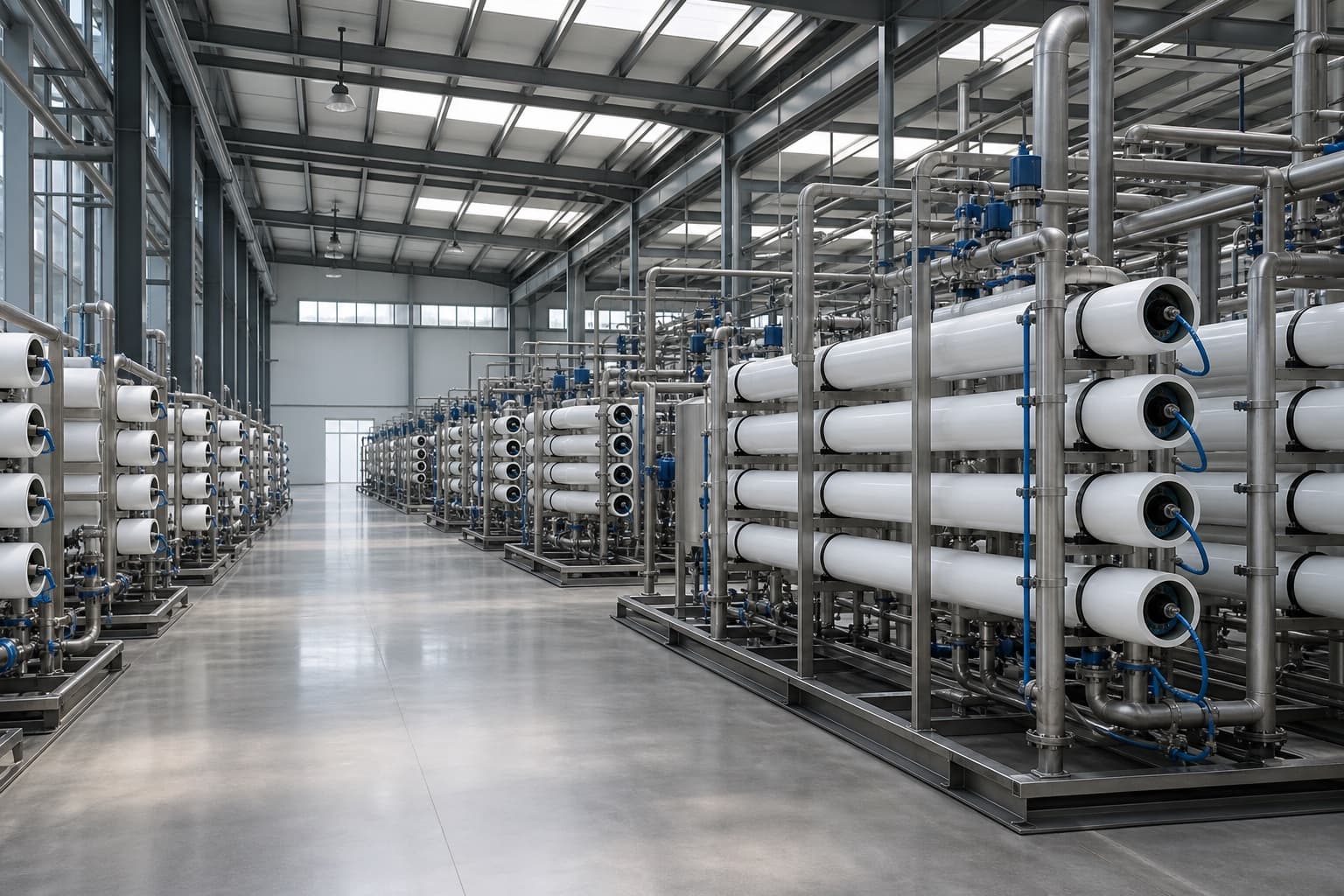
- Lower energy and capital than thermal
- 60–75%
- Overall water recovery
- 99%+
- Smaller footprint
- 70%
- Concentration before crystallization
- 280g/L
Why ZLD projects stall
The two established routes each fail a different way. The stream between their limits is a concentration duty, not an evaporation duty.
- Concentration ceiling
- Conventional RO
- ≈90,000 mg/L
- Thermal alone
- No technical limit
- The membrane train
- 280,000 mg/L
- Specific energy
- Conventional RO
- 2.7–4 kWh/m³
- Thermal alone
- 25–60 kWh/m³
- The membrane train
- ≤12 kWh/m³
- Thermal duty
- Conventional RO
- Still required on the whole flow
- Thermal alone
- The entire stream is boiled
- The membrane train
- The residue only
- The outcome
- Conventional RO
- Cannot reach ZLD
- Thermal alone
- Economically prohibitive
- The membrane train
- Compliance within the plant's economics
| Conventional RO | Thermal alone | The membrane train | |
|---|---|---|---|
| Concentration ceiling | ≈90,000 mg/L | No technical limit | 280,000 mg/L |
| Specific energy | 2.7–4 kWh/m³ | 25–60 kWh/m³ | ≤12 kWh/m³ |
| Thermal duty | Still required on the whole flow | The entire stream is boiled | The residue only |
| The outcome | Cannot reach ZLD | Economically prohibitive | Compliance within the plant's economics |
Where the mandates bind
Water-stressed regions in the Middle East are tightening discharge limits without a single federal date; US state-level requirements are expanding alongside the federal rule.
ZLD rules in force from
| Jurisdiction | Binding from | Covers |
|---|---|---|
| China | 2019 | Coal power, chemicals, textiles, manufacturing |
| India | 2022 | Textile, chemical, and thermal power plants |
| European Union | 2023–2025 | Industrial Emissions Directive, major industrial sectors |
| United States | 2029 (emerging) | EPA flue-gas desulfurization compliance for coal power |
The range that has always required an evaporator
Conventional RO stops at about 90,000 mg/L. A crystallizer wants a feed several times more concentrated than that.
mg/L TDS
- 35,000 mg/LSeawater
- 90,000 mg/LConventional RO limit
- 280,000 mg/LMemBrine Concentrator™ ceiling
| Lane | Range | From (mg/L TDS) | To (mg/L TDS) | Note |
|---|---|---|---|---|
| Membrane | Conventional RO | 0 | 90,000 | 2.7–4 kWh/m³ |
| Membrane | MemBrine Concentrator™ | 90,000 | 280,000 | 5–12 kWh/m³ |
| Thermal | Evaporation and crystallization | 90,000 | 300,000 | 25–60 kWh/m³ |
The membrane ZLD train
Three membrane stages carry the stream to crystallization-ready concentration, so the thermal unit at the end is sized only for what is left. The bulk of the water leaves at the front, at the cheapest point on the curve; the last water is the expensive water.
The generic train; each project's design basis sets the actual streams. The same drawing with the measured King Salman Park numbers is on the case study.
- 01Feeddifficult industrial water; pretreatment set by the chemistry
- 02SEBRO™ concentrate25,000 mg/L
- 03SAMRO™ concentrate90,000 mg/L
- 04MBC™ concentrate280,000 mg/L · 5–12 kWh/m³
- 05Recovered water99%+ of the feed, across the train
- 06Solidscrystallizer sized for the residue only
| Stream | Name | Detail |
|---|---|---|
| 1 | Feed | difficult industrial water; pretreatment set by the chemistry |
| 2 | SEBRO™ concentrate | 25,000 mg/L |
| 3 | SAMRO™ concentrate | 90,000 mg/L |
| 4 | MBC™ concentrate | 280,000 mg/L · 5–12 kWh/m³ |
| 5 | Recovered water | 99%+ of the feed, across the train |
| 6 | Solids | crystallizer sized for the residue only |
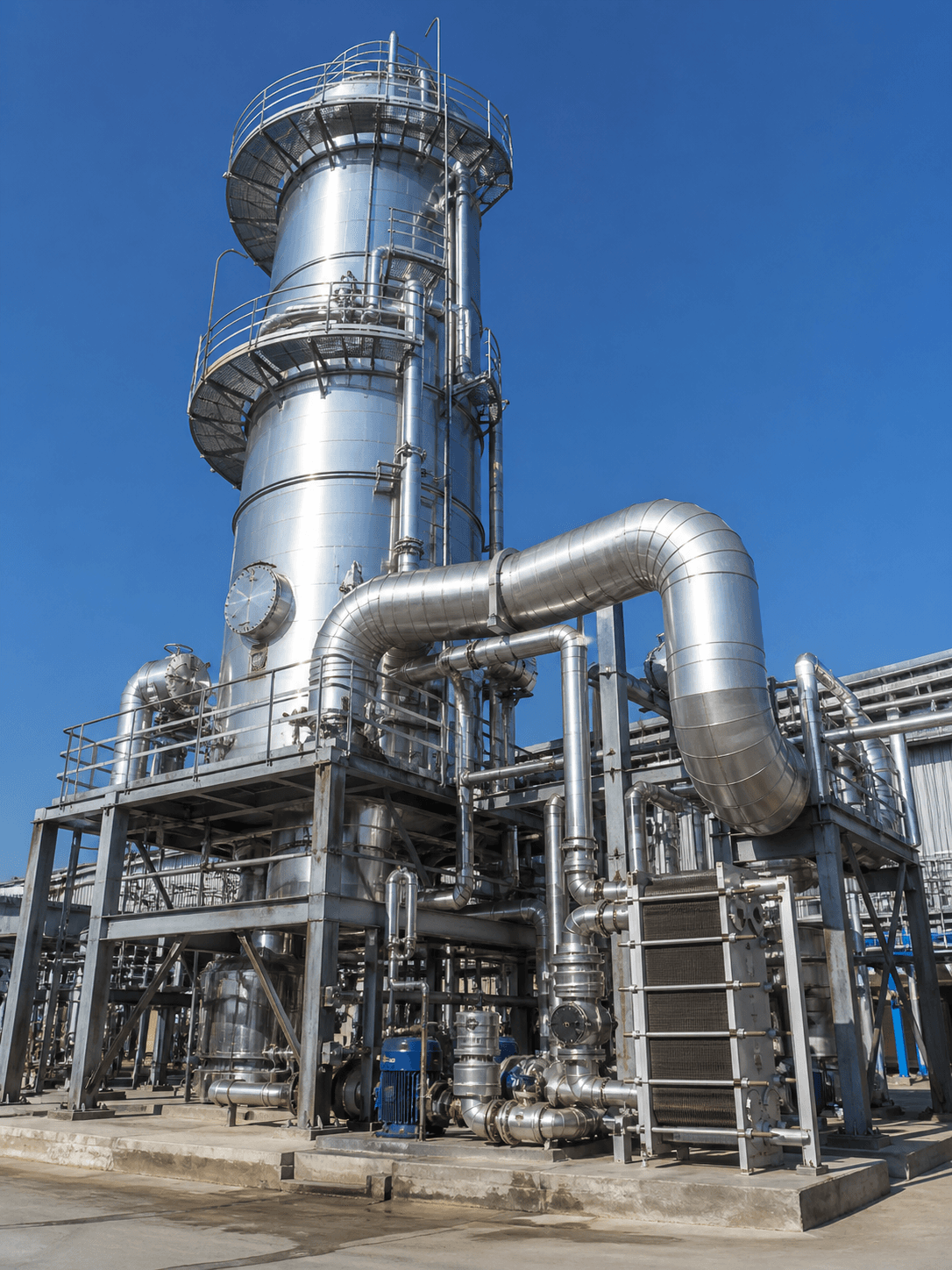
When the permit still allows some discharge
Recovery in the mid-nineties, with a much smaller thermal stage at the end of the train.
Minimal liquid discharge is the honest answer where a permit allows some discharge and full crystallization cannot yet be justified. The same train delivers it, with the last stage left out and added later.
A first read on your stream
Send the flow, the chemistry, and the target. A process engineer replies with a first read on recovery, energy, and the train worth piloting.